
Pileated Woodpecker
( Dryocpus pileatus)
Introduction
This bird’s name is correctly pronounced PIE-lee-ay-tid however, because PILL-ee-ay-tid is also in common use. Both are considered acceptable in the bird world.


We could not resist spotlighting the amusing connection between our subject and “Woody Woodpecker”, that mischievous cartoon bird with a loud theatrical staccato and chaotic behaviour, created in 1940 by animator Walter Lantz and Ben Hardaway?
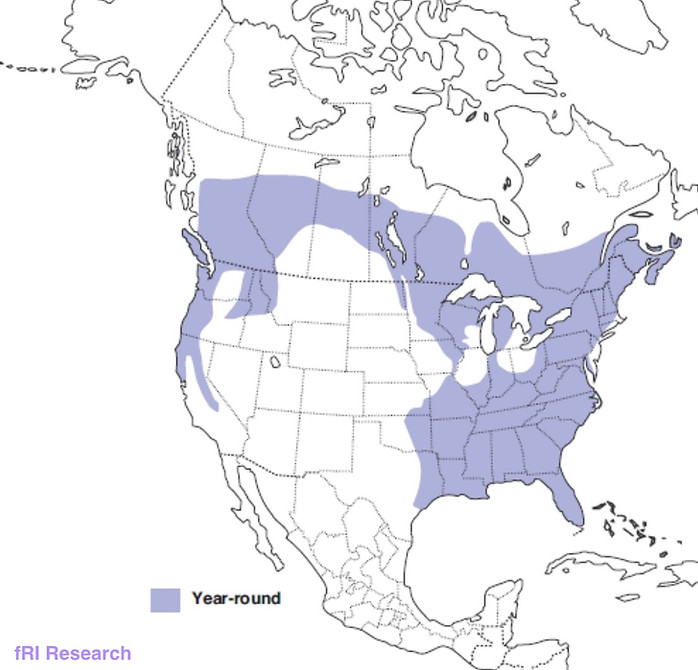
Range
Pileated Woodpeckers are widespread in North America. In British Columbia, they range throughout the southern half of the province's interior at lower elevations. They can be found on Vancouver Island and in our southern coastal forests on the Sunshine Coast. They are not found in the central and northern coasts, or on Haida Gwaii.


Description
The ivory-bill woodpecker and the imperial woodpecker were larger birds but habitat loss has caused their extirpation in North America. Mexico’s imperial woodpecker, once touted as the largest in the world, has not been seen in North America since the 1950s. Today, the Pileated Woodpecker, about the size of a crow, is one of the largest woodpecker species world-wide. In North America, it is currently the largest.
These large, predominately dark coloured birds have a flashy elongated red crest atop their heads. This crest runs from the base of the bill, over the top of the head (an area called the pileum) which is the genesis of their name “Pileated Woodpecker.”
Both males and females sport these distinctive red crests, but the male’s crest extends further toward touching the bill. Another and more positive distinction is that males can be identified by a bright red “moustache” below the male's beak.
In flight the beige-white undersides of the wings flash brightly while the upper wing surfaces display smaller light coloured segments


Habitat - Nest - Food
Due to their need for large, old trees for nesting and foraging, this species is mainly found in older forests. Larger and taller trees provide trunks large enough to accommodate large cavities (nests) high above ground. Forest stands containing dead trees (snags) are ideal for nesting and foraging. Pileated woodpeckers generally excavate their own nest cavity. In our area, western hemlock are commonly chosen. Dead trees with fungal-softened heartwood are also chosen because the lower densities of dead wood make them easier to evacuate and the presence of carpenter ants provides a food source.
Carpenter ants make up about 60% of a Pileated woodpecker’s diet. Beetle larvae, other insects, fruit, and nuts make up the rest. Pileated Woodpeckers are especially interested in the carpenter ants that live in the decaying heartwood of living trees.

Life Cycle
Pileated woodpeckers are known to live 10-12 years. Mortality rates during the first year are high due to predators such as hawks, owls, and in some areas, even snakes.
It takes about six weeks during the spring to complete the nest cavity so work starts early in the spring.
After the nest cavity is complete, egg laying begins in late April to early May. The female pileated woodpecker can lay from one to six eggs in total. She lays one egg per day in the mostly bare nest cavity. During this period she sits quietly inside or near the entrance of the nest cavity.
The eggs are about three centimeters long and have a polished semi-gloss appearance.

The male and female share brooding and feeding responsibilities; one keeps the eggs warm, while the other forages for food until the featherless chicks hatch after about 18 days. Not all survive and parents remove unhatched egg shells and dead chicks from the nest.
After hatching the chicks make rasping screech calls for food during daytime when they are hungry.
Within 12 days, they develope feathers and are strong enough to climb to the nest entrance to be fed regurgitated insects by their parents. First flights occur after another 2 weeks. They will remain with and depend upon their parents until the end of summer before they finally set out alone to find new territory.

Ecological Importance
These birds create their large cavity/nests which they subsequently abandon each year. These cavities can become homes for wildlife species who are unable to create their own cavities in which to nest such as owls, bats, and squirrels.
At least 20 different species of “secondary cavity dwellers” have been recorded using old cavities excavated by a pileated woodpecker.
Sounds
Whether you have seen a Pileated woodpecker or not, you will almost certainly have heard some of the highly distinctive sounds that they make. There are loud impact sounds and loud vocalizations.
Impact sounds:
Rhythmic tapping sounds, like drumming intended for long-distance communication.
Slower, irregular tapping, made while excavating for food or nesting.
Vocalizations:
"Wuk" or "Cuck” Call: rolling, cackling that sounds like wild laughter, with varying pitch and volume.
“Monkey Call": high-pitched chatter between mates that resembles monkey sounds.
To bring these to you we went to “All About Birds” and found this web page. Just click on the link below and you will find a few short paragraphs about the vocalizations that they make. Just as interesting are the jack-hammer-like sounds they make while excavating their nests in the trunks of trees! Enjoy.
https://www.allaboutbirds.org/guide/Pileated_Woodpecker/sounds
Endangered or Invasive Species?
The Pileated woodpecker is a close relative of the unfortunate ivory-billed woodpecker, which is now officially declared extinct, and only seen in museum displays.
The huge population decline of woodpeckers over the past few centuries has been linked to human development and the clearing of forests. Recent governmental protections combined with re-forestry efforts have played a big part in the recent turnaround of woodpecker populations. The birds themselves have also adapted and now live in both urban and suburban environments and in the wild. They have demonstrated they can survive in much smaller treed areas.
As a result the population of Pileated woodpeckers in North America has grown impressively.
Currently in BC their status is: Secure (Yellow-listed). They are not at risk, but their dependence on large, mature trees means they are vulnerable to aggressive logging.

Here is an interesting article offered by the National Audubon Society. It a quick read with short videos.
National Audubon Society: New Study Shakes Up Long-held Belief on Woodpecker Hammering.
https://www.audubon.org/news/new-study-shakes-long-held-belief-woodpecker-hammering
References
Atlas of the Breeding Birds of BC:
https://www.birdatlas.bc.ca/accounts/speciesaccount.jsp?lang=en&sp=PIWO
FRIResearch: Forestry Fact Checklist:
https://friresearch.ca/publications/pileated-woodpecker-forestry-fact-sheet
Feathered Guru: https://featheredguru.com/where-do-pileated-woodpeckers-nest/
Bird Atlas: https://www.birdatlas.bc.ca/accounts/speciesaccount.jsp?lang=en&sp=PIWO
National Audubon Society: https://www.audubon.org/field-guide/bird/pileated-woodpecker?int_src=site_search&int_query=pileated%20woodpecker https://
Government of BC: https://a100.gov.bc.ca/pub/acat/documents/r1535/whr_4162_bpiwo_1096574580030_68741ea2adba46dcb522d7a9f909273a.pdf